


Understanding and Protecting Fireflies in Colorado with Dr. Orit Peleg
Updated: Jun 18
In this webinar with CU Boulder's Dr. Orit Peleg of The Peleg Lab, we dive into the fascinating world of fireflies—their biology, their language of light, the threats putting them at risk, and how to protect them at home and in your community.
Do We Even Have Fireflies in Colorado?
Yes, we do have fireflies in Colorado! More than we know, likely, since so much of the state has no observation data on fireflies (read on to help fix that). View the webinar and/or slides to see where Dr. Peleg's lab observes fireflies locally, or check out The Butterfly Pavilion's Colorado Firefly Lifecycle Project for more nearby firefly beta.
Whether you have a backyard, a balcony, or just a love of the natural world, in this webinar you'll discover how you can help these luminous creatures thrive for generations to come. View the recording of the webinar here:
Dr. Peleg has generously shared her slides with us all, if you'd like to take a closer look at any of the maps or images you saw in the webinar recording.

Top 5 Actions You Can Take To Protect Fireflies in Colorado
Make Or Protect A Home Habitat for Fireflies!
Fireflies spend most of their lives underground, or in leaf litter, and tend to require healthy wetlands or riparian areas to truly thrive. The same landscaping choices that will bring butterflies, birds, and native bees to your yard will also support fireflies. Leave some leaves, prioritize diversity including (native) flowers, shrubs, and trees over lawn, provide water and shade, don't disturb the soil whenever possible, and skip the chemicals.
Protect Fireflies from Pesticides
According to The Xerces Society for Invertebrate Conservation, "Pesticides are believed to be a major cause of firefly declines, second only to habitat loss and fragmentation." Pesticides include both herbicides used to eliminate "weeds" or insecticides to kill mosquitoes and other invertebrates, among others. Not only can you say no to pesticides at home, but you can work with your HOA, your local parks department, your county, and even your state legislature to reduce unecessary pesticide pressures that degrade environmental health for all living beings (including us) and are especially injurious to fireflies at all life stages. Sign up for PPAN's email list or send us an email to get involved.
Turn Off the Lights!
Fireflies—like all wildlife—need the night. Turn off all unnecessary outdoor lighting, and follow the guidance of Darksky Colorado to mitigate the impact of lights that must stay on.
Don't Catch Fireflies
In their luminous adult form, the mission of a firefly is to reproduce. Please enjoy their magical presence without catching them, which would prevent them from growing their populations, which have already declined far too much.
Participate in Community Science Projects Studying Fireflies
And finally, there are four wonderful community science opportunities that need people just like you to strengthen their datasets and research. The more we can discover about these wonderful creatures, the better we can protect them. Get involved!
If you live in Boulder, help the The Peleg Lab Record Firefly Flashes
If you live in Colorado, get involved with the Butterfly Pavilion's Firefly Lifecycle Project
Join the Xerces Society Firefly Atlas from anywhere
And report your firefly sightings on iNaturalist—note: fireflies can often only be identified by flash patterns, so try to capture video. You can upload gifs to iNaturalist or link to externally hosted video content within your observation.
Thank You to Our Speaker!
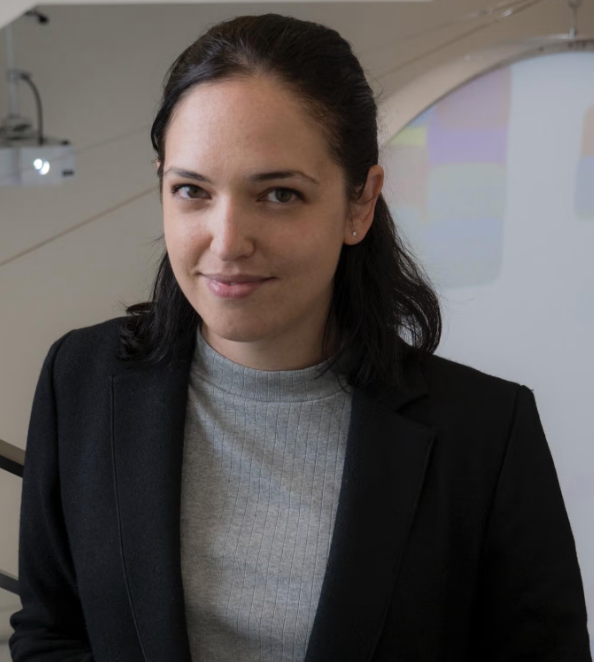
Dr. Peleg seeks to understand the behavior of disordered living systems by merging tools from physics, biology, engineering, and computer science. Her research is aimed at understanding how biological communication signals are generated and interpreted. She uses insect swarms as a model system for identifying how organisms harness the dynamics of communication signals, perform spatiotemporal integration of these signals, and propagate those signals to neighboring organisms. Examples include fireflies who communicate over long distances using light signals, and bees who serve as signal amplifiers to propagate pheromone-based information about the queen’s location.
Dr. Peleg is a global leader in the Physics of Living Systems. In addition to her faculty appointment at CU Boulder's BioFrontiers and in the Department of Computer Science, she is also affiliated with the Departments of Physics, Applied Math, and Ecology & Evolutionary Biology. In addition, she is an External Faculty member of the Santa Fe Institute. She has also won numerous distinguished awards for her research and teaching. Learn more about Dr. Peleg here!
Happy Colorado Pollinator Month!
Since 2017, at PPAN's behest, the Governor’s office has designated the entire month of June as Colorado Pollinator Month to celebrate our state’s biodiversity and raise awareness about the important roles that pollinators play in preserving ecosystems and human health, as well as agricultural productivity.

You Can Help
Finally, here the poem mentioned by Dr. Peleg at the end of her talk.
Fireflies
by Richard Newman from Borrowed Towns.
Tonight my yard is full of fireflies—
a glitterfest of green, blinking by hundreds,
exactly like last year, when she and I
drove out into the Missouri countryside
to talk about our marriage. It was thick
with greenery. The air was hot and thick,
and we had decided to try and stay together,
though by first light she'd changed her mind again,
and, to be honest, our eleventh hour
hope and promise lacked the weight of truth.
We wandered off the rocky dirt road
over weeds and brambles, through branches
and spiderwebs, and pressed into a clearing,
and it was like a pocket in the darkness
that surrounded us—the misty night
backlit with thousands of glittering fireflies
bettering the stars. It was a mating dance,
and we gazed into a sputtering green sea
of desire—such irresistible beckoning.
Ours was, too—a death-dance of mating,
a slower, indecisive tarantella,
and she asked me never to write about this,
but I knew then that I had nothing to lose,
that at that moment there was nothing I wanted
more than to write about the fireflies.


